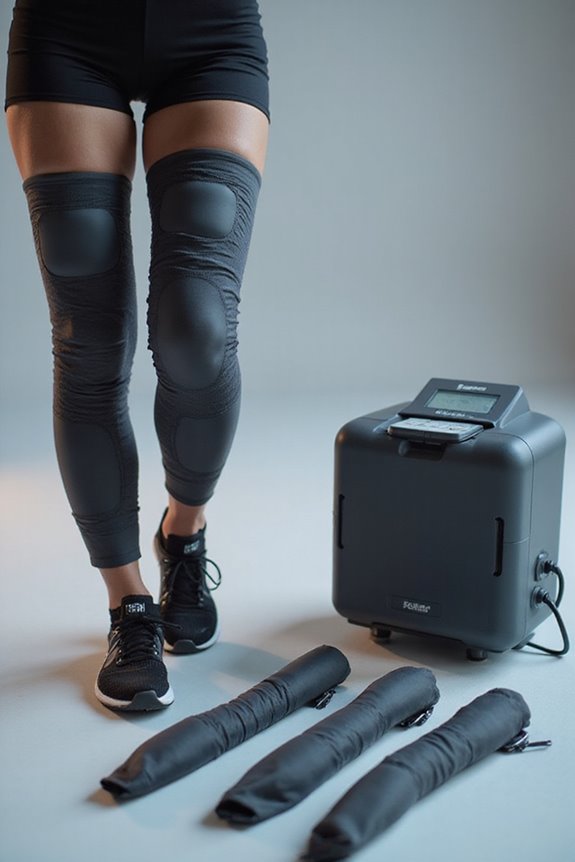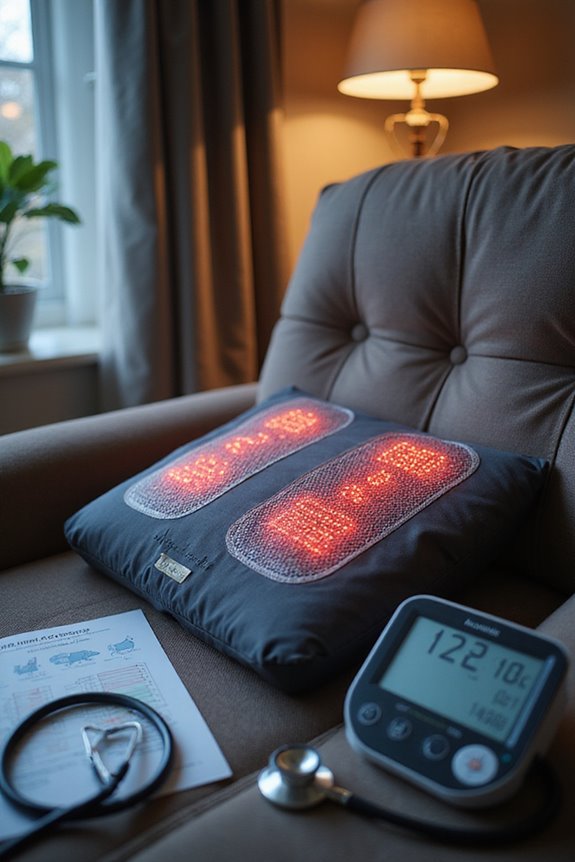
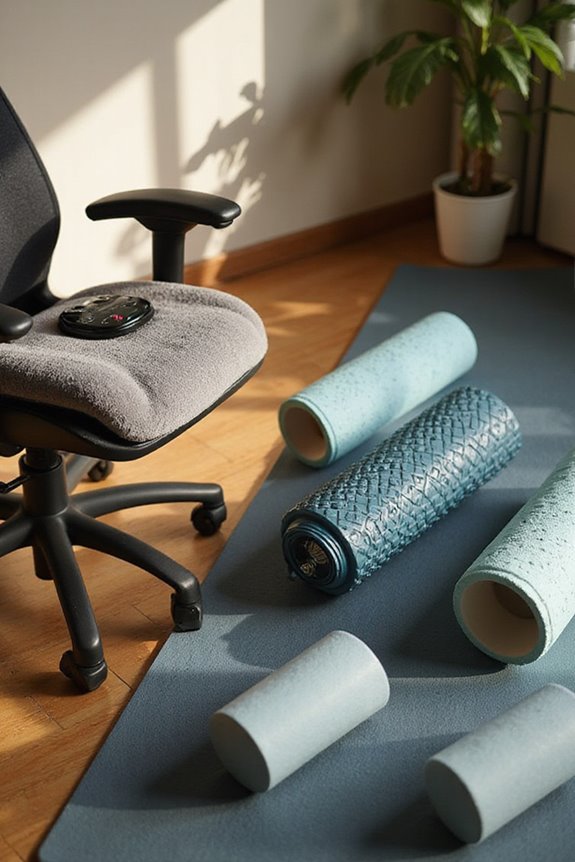

Massage cushions and foam rollers offer distinct benefits.
- Coverage: Foam rollers engage large muscle groups, while massage cushions focus on specific areas.
- Pressure Application: Foam rollers utilize self-myofascial release, whereas massage cushions provide mechanical vibrations and kneading.
- Recovery: Foam rollers enhance flexibility and pain management. In contrast, massage cushions facilitate localized deep tissue stimulation with minimal effort.
- Portability: Massage cushions are compact; foam rollers are bulkier.
Further details on their differences will be explored.
Key Takeaways
- Foam rollers provide broad muscle coverage and allow for self-myofascial release, while massage cushions focus on targeted relief through mechanical vibrations and kneading.
- Massage cushions are compact and user-friendly, offering plug-and-play functionality, whereas foam rollers are bulkier and require manual engagement.
- Foam rollers promote systemic flexibility and improved range of motion, while massage cushions provide localized muscle relaxation and increased blood flow.
- Foam rollers demand more physical effort for use, making them less accessible, while massage cushions facilitate passive recovery with minimal effort.
- Textured foam rollers enhance deep tissue work through concentrated pressure, whereas massage cushions deliver rhythmic, localized pressure with preset programs.
Coverage and Targeting Area
When comparing coverage and targeting area, foam rollers and massage cushions exhibit distinct characteristics that cater to different therapeutic needs.
Foam Rollers:
- Provide broad muscle coverage, ideal for large muscle groups such as legs, back, and hips.
- Allow for active user movement, enabling flexibility and joint mobilization.
- Can be utilized in multiple positions for extensive muscle engagement.
Massage Cushions:
- Typically cover medium to large surface areas but focus on seated or reclining body parts.
- Offer targeted relief by applying consistent pressure on specific muscles, beneficial for chronic tension.
- Require less movement, providing stationary, stable relief.
Types of Therapy and Pressure Applied
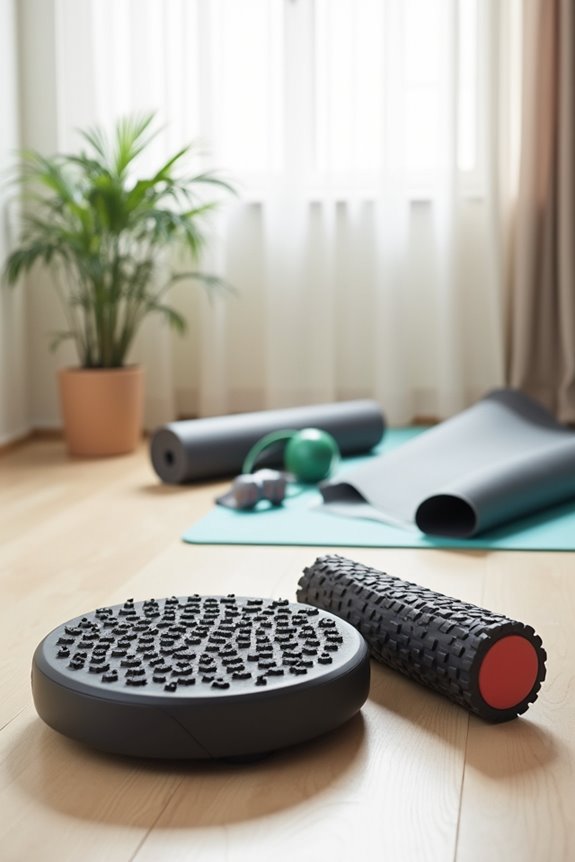
The comparison of therapy types and pressure application reveals significant distinctions between massage cushions and foam rollers.
Therapy Techniques
- Massage cushions utilize mechanical vibrations, kneading, and tapping to simulate massage.
- Foam rollers focus on self-myofascial release, applying sustained pressure to muscles.
- Textured foam rollers enhance deep tissue work through concentrated pressure points.
Pressure Variability
- Massage cushions provide rhythmic, localized pressure, often limited to preset programs.
- Foam rollers allow user-controlled pressure, adjusting body position and rolling speed for desired intensity.
- Vibrating foam rollers combine pressure with oscillation for enhanced relaxation.
Depth and Specificity
– Massage cushions generally offer superficial to moderate depth pressure, while foam rollers enable variable pressure depth, from superficial to deep.

PATENTED MULTI-SENSORY CRUSHER BASS TECHNOLOGY. Featuring two full-range 40mm audio drivers plus additional dual bass drivers, your music and movies will come alive with a...
Mobility and Flexibility Benefits
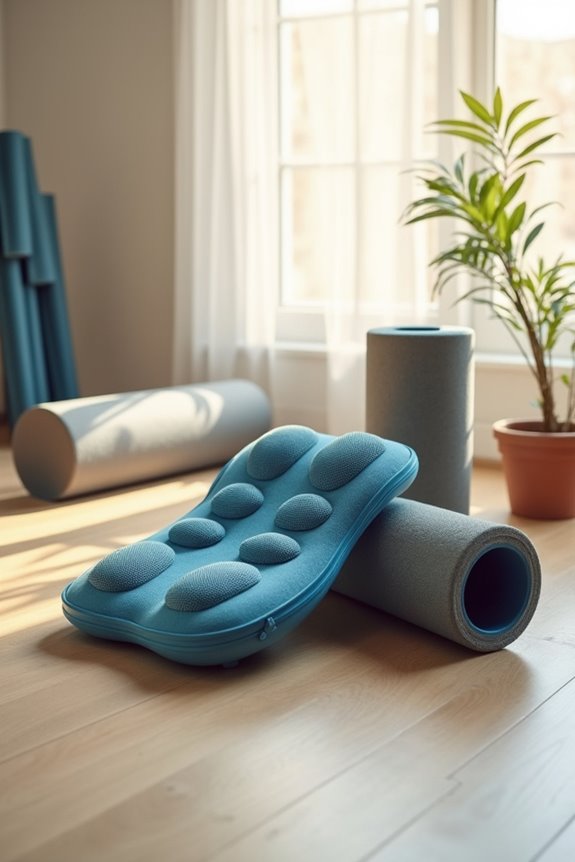
Mobility and flexibility are essential components of physical health, influencing overall performance and injury prevention.
Foam Rollers:
- Facilitate self-myofascial release, alleviating tightness in muscles and fascia.
- Enhance circulation, reduce stiffness, and improve range of motion over time.
- Effective for large muscle groups like legs and back, contributing to systemic flexibility.
- Regular use is linked to injury prevention by maintaining muscle and soft tissue health.
Massage Cushions:
- Provide localized muscle relaxation, easing tightness around specific joints.
- Employ vibration and kneading actions to increase blood flow and muscle pliability.
- While effects on flexibility are more localized, they can support mobility indirectly by reducing stiffness.
Recovery and Pain Relief
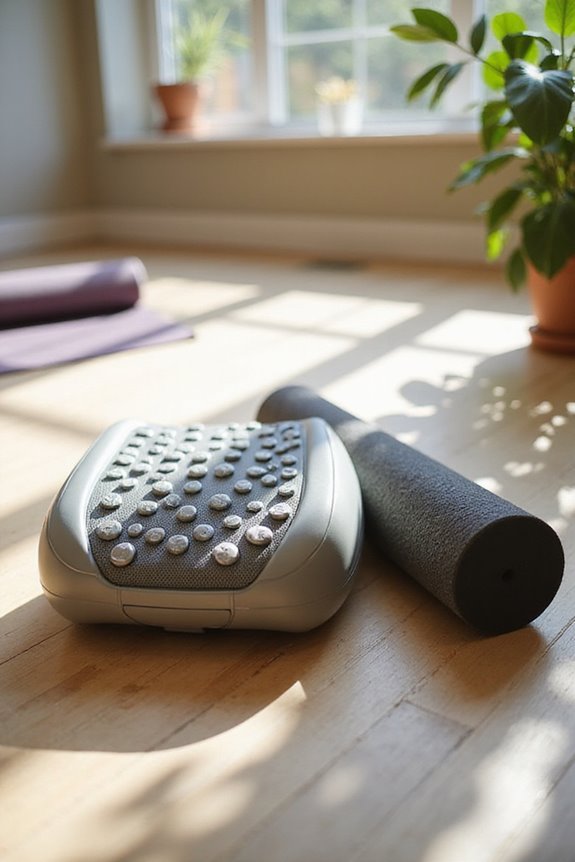
Effective recovery and pain relief are critical for athletes and individuals engaging in physical activity, as they contribute considerably to performance enhancement and injury prevention.
Massage Cushions
- Provide localized deep-tissue stimulation through vibration, effectively targeting muscle knots.
- Enhance blood circulation, aiding in muscle recovery.
- Require minimal physical effort, suitable for passive recovery.
Foam Rollers
- Utilize self-myofascial release, compressing broader muscle areas for relaxation.
- Effective for large muscle groups like quadriceps and hamstrings.
- Can enhance flexibility and provide generalized pain management.
Portability and Ease of Use
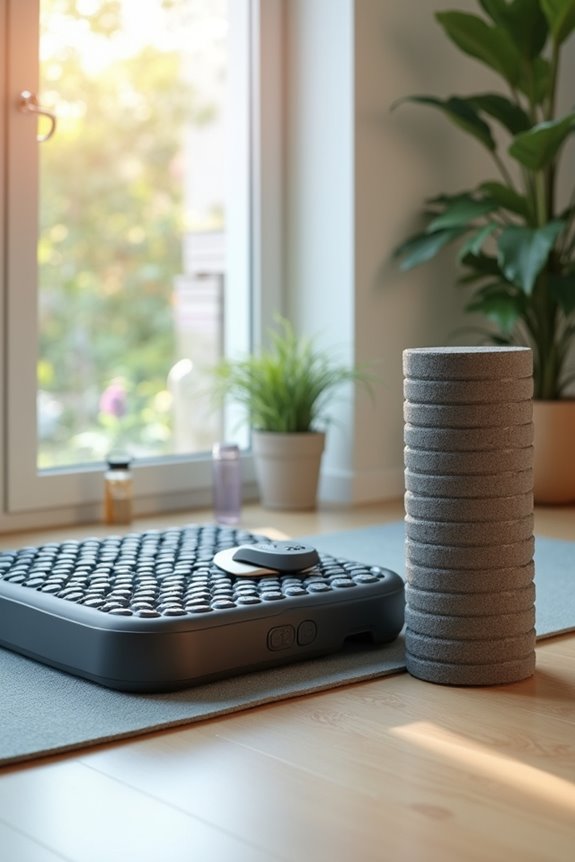
Size and Portability****
- Foam rollers are larger and bulkier, reducing travel convenience.
- Massage cushions are compact and lightweight, ideal for home, office, or travel.
Setup and Convenience
- Foam rollers require manual positioning and engagement, which can be cumbersome.
- Massage cushions offer plug-and-play functionality, enabling effortless operation.
User Experience
- User feedback indicates that foam rolling can be physically demanding, limiting accessibility.
- In contrast, massage cushions provide hands-free relaxation, accommodating various fitness levels. Additionally, many massage cushions feature customizable settings that allow users to tailor their experience for optimal comfort.
Versatility in Use Locations
– Foam rollers need flat surfaces, while massage cushions adapt to various seating arrangements, enhancing usability in diverse environments.
Cost and Accessibility
The comparison of massage cushions and foam rollers extends to reflections of cost and accessibility, which are significant factors for potential users.
- Price Differences: Foam rollers are priced between $6 and $35, with basic models starting around $13. In contrast, massage cushions range from $40 to over $100, depending on features like vibration and heat.
- Consumer Preferences: Foam rollers are widely available in fitness stores and online, catering to a broad market, including athletes and casual users.
- Maintenance Costs: Foam rollers require no ongoing expenses, while massage cushions may incur costs for repairs or battery replacements.

★ Siless VIBRO 80 mil is ultimate quality sound deadening insulation. Designed for the automotive industry as an industrial sound damping material for applications that need extreme performance, it is well suited to the demanding car enthusiast as well.

RUGGED PROTECTION: Crushproof high-impact polymer multi-purpose case, heavy duty handles, push button latches and stainless steel lock hasps for the ultimate in affordable gear protection

【Multiple Use】 This professional C stand is ideal for mounting CB60 RGB 70W/RGB1200 LED video lights, strobe lights, reflectors, umbrellas, SF30120Q/SF-RPBO26 softboxes, and other photographic equipment. This photography stand maximizes the flexibility of use with its 4.2ft (128cm) grip arm with two standard grip heads, allowing you to position equipment in far more angles and ways. Designed for use inside a studio and collapsible for transport to be used on location
Choosing the Right Tool for Your Needs
When selecting between massage cushions and foam rollers, individuals must consider their specific needs and preferences for muscle recovery and relaxation.
Targeted Relief vs. Broader Muscle Engagement
- Massage cushions provide localized relief, ideal for specific tension points.
- Foam rollers address larger muscle groups, promoting overall flexibility.
User Experience
- Cushions offer a user-friendly operation, suitable for those with limited mobility.
- Foam rollers require proper technique for maximum benefits.
Portability and Convenience
- Massage cushions are compact and often battery-operated for easy use.
- Foam rollers are bulkier, more suited for stationary environments.
Ultimately, personal preference dictates the choice; those seeking quick, targeted relief may prefer cushions, while individuals focusing on thorough muscle maintenance might opt for foam rollers. Additionally, some massage cushions feature customizable intensity levels, allowing users to tailor their experience based on personal comfort.

Upgraded Larger & Thicker 2-Pack Design: Experience instant comfort with our upgraded, wider and thicker desk elbow pad! This 2-pack armrest for desk set includes...
Frequently Asked Questions
Can Foam Rollers and Massage Cushions Be Used Together?
Foam rollers and massage cushions can indeed be used together, offering combined benefits that cater to diverse user preferences. This harmonious approach enhances muscle recovery, providing both targeted relief and soothing relaxation for an all-encompassing experience.
How Often Should I Use Foam Rollers or Massage Cushions?
Determining ideal frequency for foam rollers or massage cushions is essential; daily foam rolling offers remarkable recovery benefits, while massage cushions excel with weekly sessions. Together, they create a harmonious routine for enhanced relaxation and muscle care.
Are There Specific Techniques for Using Foam Rollers or Massage Cushions?
Various foam roller techniques, including broad strokes and targeted pressure, enhance flexibility and recovery. In contrast, massage cushion applications focus on passive relaxation through vibration and kneading, offering soothing relief without the need for active effort.
Can Children Use Foam Rollers or Massage Cushions Safely?
In the domain of children’s safety, foam rolling can be beneficial when age-appropriate models are chosen, while massage cushions pose risks due to variable settings. Supervision is essential for both methods to guarantee well-being.
Are There Any Contraindications for Using These Tools?
When considering the use of massage tools, individuals must recognize contraindications related to health conditions. Safety precautions are essential, particularly for those with inflammation, recent injuries, or cardiovascular issues, ensuring a safe and beneficial experience.