As an Amazon Associate, we earn from qualifying purchases. Some links on this site are affiliate links at no extra cost to you. Our recommendations are based on thorough research and editorial judgment.

What Herbs Help Alleviate Chronic Pain?

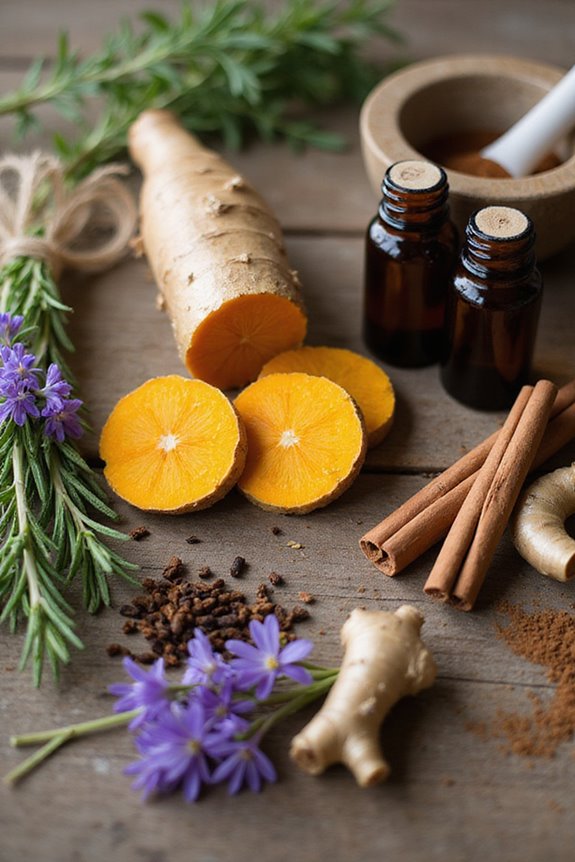
Turmeric, boswellia serrata, and ginger are notable herbs for alleviating chronic pain due to their anti-inflammatory properties. Turmeric, containing curcumin, may reduce pain in rheumatoid arthritis comparable to NSAIDs. Boswellia serrata improves knee function in osteoarthritis, while ginger alleviates osteoarthritis pain more effectively than placebo. Essential oils, such as lavender and peppermint, also provide pain relief. For a thorough understanding of herbal combinations and their effectiveness, additional information is available.
Key Takeaways
- Turmeric and Curcumin: Potent anti-inflammatory agents that alleviate rheumatoid arthritis symptoms and reduce pain effectively comparable to NSAIDs.
- Boswellia Serrata: Provides significant pain relief and improves joint function in osteoarthritis by inhibiting cartilage-degrading enzymes.
- Ginger: Contains natural compounds that reduce osteoarthritis pain and serve as an effective adjuvant therapy without NSAID side effects.
- Lavender Oil: Acts as an analgesic and anti-inflammatory, effectively reducing pain severity in conditions like migraines and post-operative discomfort.
- Peppermint Oil: Offers a cooling sensation for headaches and muscle pain, and is effective for reducing colon spasms.
Turmeric and Curcumin: Natural Anti-Inflammatory Agents
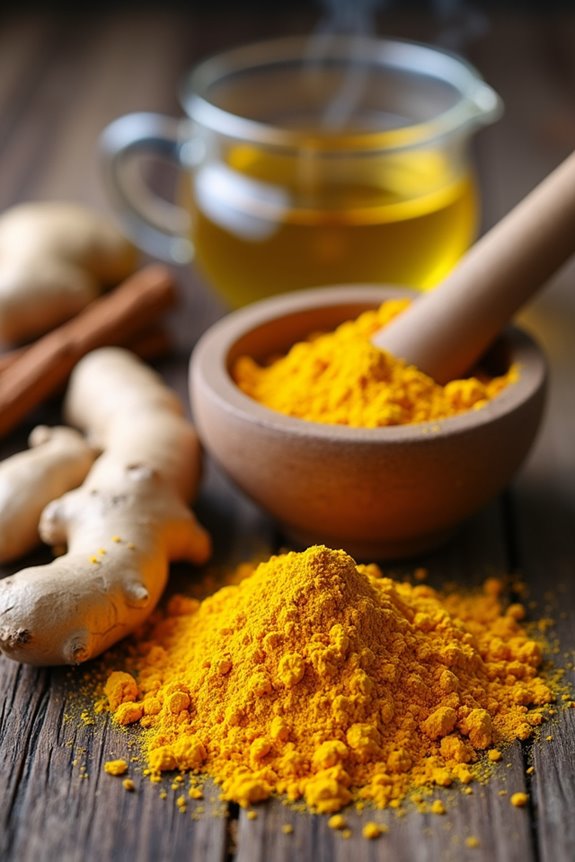
Turmeric, a widely recognized spice, is increasingly noted for its potential health benefits, particularly due to its primary bioactive compound, curcumin.
Curcumin Benefits
- Acts as a potent anti-inflammatory agent.
- Inhibits inflammatory mediators and modulates key signaling pathways.
- Reduces systemic inflammation by suppressing pro-inflammatory cytokines.
Efficacy in Joint Pain
- Clinical trials suggest turmeric supplementation (0.5 to 1.2 g/day) alleviates symptoms in rheumatoid arthritis patients.
- Comparable effectiveness to NSAIDs in reducing pain and inflammation.
Safety and Dosage
- Curcumin’s excellent safety profile makes it an appealing alternative.
- Recommended turmeric dosage should be adhered to for ideal results.
Regular intake of turmeric may contribute to improved physical function and reduced inflammation, supporting its role in chronic pain management.
Boswellia Serrata: The Power of Frankincense for Pain Relief

Boswellia serrata, commonly known as Indian frankincense, is gaining recognition in the field of chronic pain management due to its anti-inflammatory properties.
Boswellia Benefits:
- Demonstrates significant pain relief and improved knee function in osteoarthritis patients.
- Inhibits cartilage-degrading enzymes, protecting joint health.
Frankincense Applications:
- Traditionally utilized in Ayurveda for various inflammatory conditions, including arthritis and ulcerative colitis.
- Available in multiple forms: inhalation, topical application, and oral supplements.
Clinical Evidence:
- Randomized controlled trials indicate symptom relief can occur within seven days of treatment.
- Safe for use with minimal side effects, making it suitable for chronic pain management.
Boswellia serrata’s versatility and efficacy present a valuable option for those seeking natural pain relief solutions.
Ginger: A Soothing Botanical for Inflammation

Ginger, a widely recognized botanical, has garnered attention for its significant anti-inflammatory properties, making it a valuable option in chronic pain management.
Anti-Inflammatory Action
- Ginger contains over 400 natural compounds, many of which exhibit anti-inflammatory effects comparable to non-steroidal anti-inflammatory drugs (NSAIDs).
- Its bioactive compounds modulate immune cell activity, reducing inflammatory responses and chronic pain associated with conditions like arthritis.
Clinical Evidence
- Systematic reviews indicate that ginger supplements alleviate osteoarthritis pain more effectively than placebo.
- Clinical trials support ginger’s role as an adjuvant therapy, offering pain relief without the side effects of NSAIDs.
Practical Use
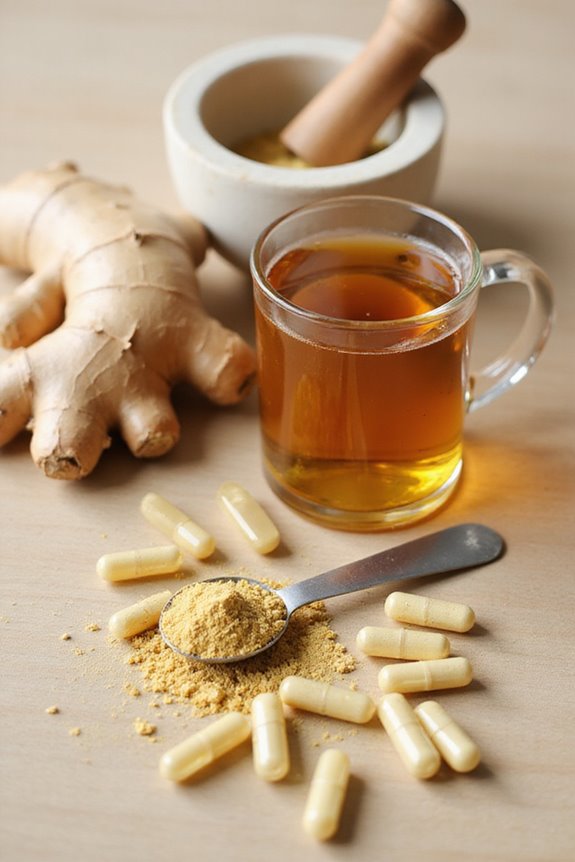
– Ginger tea and supplements are available in various forms, with dosages typically ranging from 500 mg to 2 g daily, based on clinical evidence.
Essential Oils: Aromatic Solutions for Pain Management

Essential oils offer versatile applications in pain management, providing relief through various mechanisms.
Lavender Oil Benefits:
- Acts as an analgesic and anti-inflammatory agent, comparable to tramadol.
- Reduces pain severity in migraines and alleviates discomfort in pediatric post-tonsillectomy cases.
Peppermint Oil Applications:
- Contains menthol, providing a cooling sensation that alleviates headaches and muscle pain.
- Effective for reducing colon spasms and is commonly used for back and joint pain. Natural alternative to over-the-counter pain relief medications.
These essential oils, with their respective properties, serve as natural remedies in chronic pain management, supporting wellness and improving quality of life. Their integration into therapeutic practices showcases their growing relevance in holistic health approaches.
Traditional Chinese Medicine Alkaloids: Multi-Target Approaches
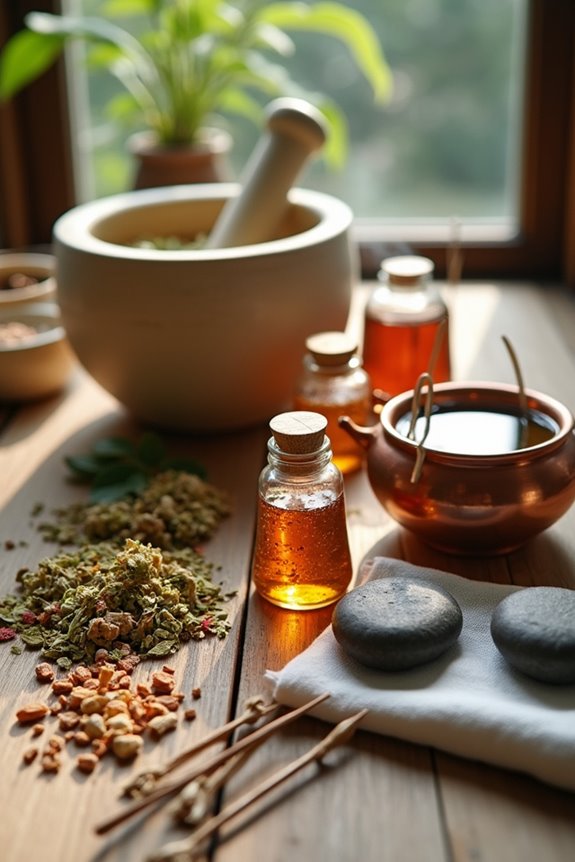
Traditional Chinese Medicine (TCM) utilizes a variety of alkaloids that offer multi-target approaches for managing chronic pain. Key analgesic alkaloids include tetrahydropalmatine, aloperine, and matrine, which function by inhibiting ion channels and modulating GABA and opioid receptors, effectively suppressing pain signals.
- These alkaloids also reduce neuronal inflammation and oxidative stress, addressing underlying causes of chronic pain.
- Combination therapies utilizing alkaloid synergy provide superior outcomes, benefiting 30-50% of chronic pain patients.
- TCM categorizes herbs into “Jun,” “Chen,” “Zuo,” and “Shi,” optimizing multi-targeted therapy.
This holistic framework emphasizes not only symptom relief but also the restoration of neurotransmitter balance, enhancing overall pain management strategies in TCM.
Devil’s Claw: A Herbal Remedy for Musculoskeletal Pain
Devil’s claw, scientifically known as Harpagophytum, is a flowering plant that has garnered attention for its potential benefits in managing musculoskeletal pain. Traditionally utilized for conditions like arthritis, its dried tuberous roots are the primary source of herbal remedies.
Devil’s Claw Benefits
- Contains iridoid glycosides, including harpagoside and harpagide, which exhibit anti-inflammatory and analgesic properties.
- May alleviate symptoms of osteoarthritis and lower back pain.
- Supports reduction of nonsteroidal anti-inflammatory drugs (NSAIDs) dosage.
Devil’s Claw Dosage
- Typically, the recommended dosage ranges from 300 to 600 mg of standardized extract daily.
- Consultation with a healthcare professional is advised for personalized guidance and safety monitoring.
Celery Seed: Supporting Joint Health Naturally
Celery seed, often recognized for its potential therapeutic benefits, has emerged as a natural option for supporting joint health.
Celery Seed Benefits
- Anti-Inflammatory Properties: Celery seed extract (CSE) effectively suppresses arthritis inflammation, comparable to common NSAIDs, without gastric irritation.
- Joint Pain Improvement: Clinical trials noted significant enhancements in joint pain, stiffness, and overall physical function, with 45% of participants experiencing marked reductions in swelling.
Gout Management
– Celery seed extracts demonstrate anti-gout properties, reducing uric acid levels and inflammatory cell accumulation around joints.
Additional Support
– Calming effects on the nervous system and improved circulation enhance overall joint health.
Valeriana Officinalis: Addressing Pain-Related Sleeplessness
Valeriana officinalis, commonly known as valerian root, plays a significant role in addressing insomnia related to chronic pain.
- Valerian Mechanisms: Valerian binds to GABA receptors, mirroring benzodiazepines, to induce calming effects without dependency risks.
- Sleep Enhancement: Its sedative properties assist in alleviating difficulties in falling asleep caused by chronic pain discomfort.
- Indirect Pain Relief: Improved sleep quality can enhance restorative sleep stages, thereby reducing pain perception.
- Clinical Use: Primarily targets insomnia and sleep disturbances exacerbated by pain-related conditions.
Valerian is available in extracts, capsules, or teas, often requiring several days for noticeable effects. Understanding its mechanisms and benefits can help individuals seeking relief from pain-related sleeplessness.
Combining Herbal Remedies: Enhancing Pain Relief Strategies
Combining various herbal remedies can greatly enhance pain relief strategies by leveraging the synergistic effects of multiple botanical compounds.
Effective Combinations
- Boswellia and Turmeric: Amplifies anti-inflammatory effects, beneficial for chronic joint pain.
- Ginger and Willow Bark: May improve muscle pain relief and decrease inflammation from physical activity.
- Capsaicin: Topical application targets localized nerve pain effectively when combined with oral supplements.
- Devil’s Claw with Boswellia: Potentially increases pain reduction in musculoskeletal conditions.
Personalized Approaches
Utilizing personalized combinations based on individual symptoms optimizes efficacy and safety. Multimodal use of herbs addresses pain from various pathways, reducing reliance on single agents.
Safety Considerations
Consultation with healthcare professionals is essential to avoid potential drug-herb interactions and guarantee appropriate dosing.
Frequently Asked Questions
Can Herbs Replace Conventional Pain Medications Completely?
In the domain of pain management, herbal efficacy offers intriguing possibilities; however, complete replacement of conventional medications remains elusive. Herbs may complement treatments, yet severe pain often demands more reliable, potent interventions for ideal relief.
How Long Does It Take for Herbal Remedies to Work?
The herb effectiveness timeline varies markedly among individuals. Factors like metabolism and pain type influence response variability. Generally, initial benefits may appear within days, but sustained relief often necessitates longer, consistent use of herbal remedies.
Are There Any Risks of Using Herbal Pain Relief?
Concerns surrounding herbal pain relief include potential herb interactions and the importance of adhering to dosage guidelines. Users should remain vigilant about side effects and consult healthcare professionals to guarantee safe and effective use of these remedies.
Can I Combine Multiple Herbs for Better Results?
In a bustling apothecary, enthusiasts pondered herb combinations for enhanced effects. Following dosage guidelines is essential; carefully selected blends can optimize therapeutic benefits, promoting a sense of community in holistic health while minimizing potential risks.
How Do I Know Which Herb Is Best for My Pain?
Determining the best herb requires careful consideration of herb selection criteria and pain type considerations. Evaluating individual symptoms, pain location, and potential interactions can guide effective choices, fostering a sense of community in shared healing experiences.